JEE Main 2026 — Hydrocarbons Question with Solution
JEE Main 2026 (04 April Shift 1)
Question
An alkene on ozonolysis followed by reduction gives following products: ( moles), , . The alkene is:
Choose an option
Show full solutionCorrect option: C
Correct answer
C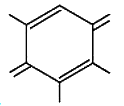
Step-by-step explanation
Ozonolysis (followed by reductive workup with ) cleaves bonds and converts each alkene carbon into a carbonyl. We can reverse-engineer the parent alkene from the fragments obtained.
Analysing the products:
: Two equivalents of formaldehyde indicate the presence of two terminal or exocyclic groups in the parent molecule.
(biacetyl): To get this discrete fragment, the parent alkene must contain the structural unit , i.e., an endocyclic double bond in which both sp carbons bear methyl substituents.
(mesoxaldehyde): This arises from a fragment like , where cleavage of the adjacent bonds generates three consecutive carbonyl groups (and also contributes to the formaldehyde count from the exocyclic ).
Evaluating the options:
The most diagnostic product is biacetyl, so the parent structure must contain the unit.
Option : One methyl group is on the endocyclic double bond and the other methyl is on a separate sp carbon. Cleavage cannot give biacetyl.
Option : Only a single methyl group is present, so biacetyl cannot be formed.
Option : The methyl groups lie on opposite ends of the ring (across a -diene-type arrangement). Ozonolysis would place these methyls in different fragments, so biacetyl cannot be formed.
Option : The left side of the ring contains an endocyclic double bond in which both carbons carry methyl groups, giving exactly the required arrangement. Cleavage of this bond together with the adjacent ring double bonds releases a discrete fragment. The right side of the molecule carries exocyclic groups, which on cleavage produce the two moles of , while the intervening carbons give rise to .
Hence, the correct structure that yields all three ozonolysis products is option .
Analysing the products:
: Two equivalents of formaldehyde indicate the presence of two terminal or exocyclic groups in the parent molecule.
(biacetyl): To get this discrete fragment, the parent alkene must contain the structural unit , i.e., an endocyclic double bond in which both sp carbons bear methyl substituents.
(mesoxaldehyde): This arises from a fragment like , where cleavage of the adjacent bonds generates three consecutive carbonyl groups (and also contributes to the formaldehyde count from the exocyclic ).
Evaluating the options:
The most diagnostic product is biacetyl, so the parent structure must contain the unit.
Option : One methyl group is on the endocyclic double bond and the other methyl is on a separate sp carbon. Cleavage cannot give biacetyl.
Option : Only a single methyl group is present, so biacetyl cannot be formed.
Option : The methyl groups lie on opposite ends of the ring (across a -diene-type arrangement). Ozonolysis would place these methyls in different fragments, so biacetyl cannot be formed.
Option : The left side of the ring contains an endocyclic double bond in which both carbons carry methyl groups, giving exactly the required arrangement. Cleavage of this bond together with the adjacent ring double bonds releases a discrete fragment. The right side of the molecule carries exocyclic groups, which on cleavage produce the two moles of , while the intervening carbons give rise to .
Hence, the correct structure that yields all three ozonolysis products is option .
Practice this on the real CBT interface
Solve this JEE Main question (and the rest of the Hydrocarbons chapter) on PrepSharp's TCS iON-style CBT player — with timer, bookmarks and session analytics.
Solve interactively →About this question
This is a previous-year question from JEE Main 2026, covering the Hydrocarbons chapter of Chemistry. PrepSharp catalogues every PYQ from JEE Main with a verified answer key and step-by-step solution prepared by IIT alumni — so you can search by chapter, topic or year and revise efficiently.